

ON · AB · BC · SK · MB · QC
Trade Name Registration for Canadian Businesses
A trade name is the name your business operates under when it’s different from your legal name — like Sarah Chen running her shop as “Riverside Coffee.” Sole proprietors, partnerships and corporations doing business under another name all need to register it with their provincial registry before opening a business bank account or signing contracts. We prepare and file your registration in Ontario, Alberta, British Columbia, Saskatchewan, Manitoba or Quebec, and check your name for conflicts first.
- Name availability check
- All filings prepared for you
- Registration confirmation provided
Trade Name Registration by Province
Trade names are registered provincially in Canada, so the rules, forms and registry differ depending on where you operate. Choose your province below to see what’s involved and start your filing.
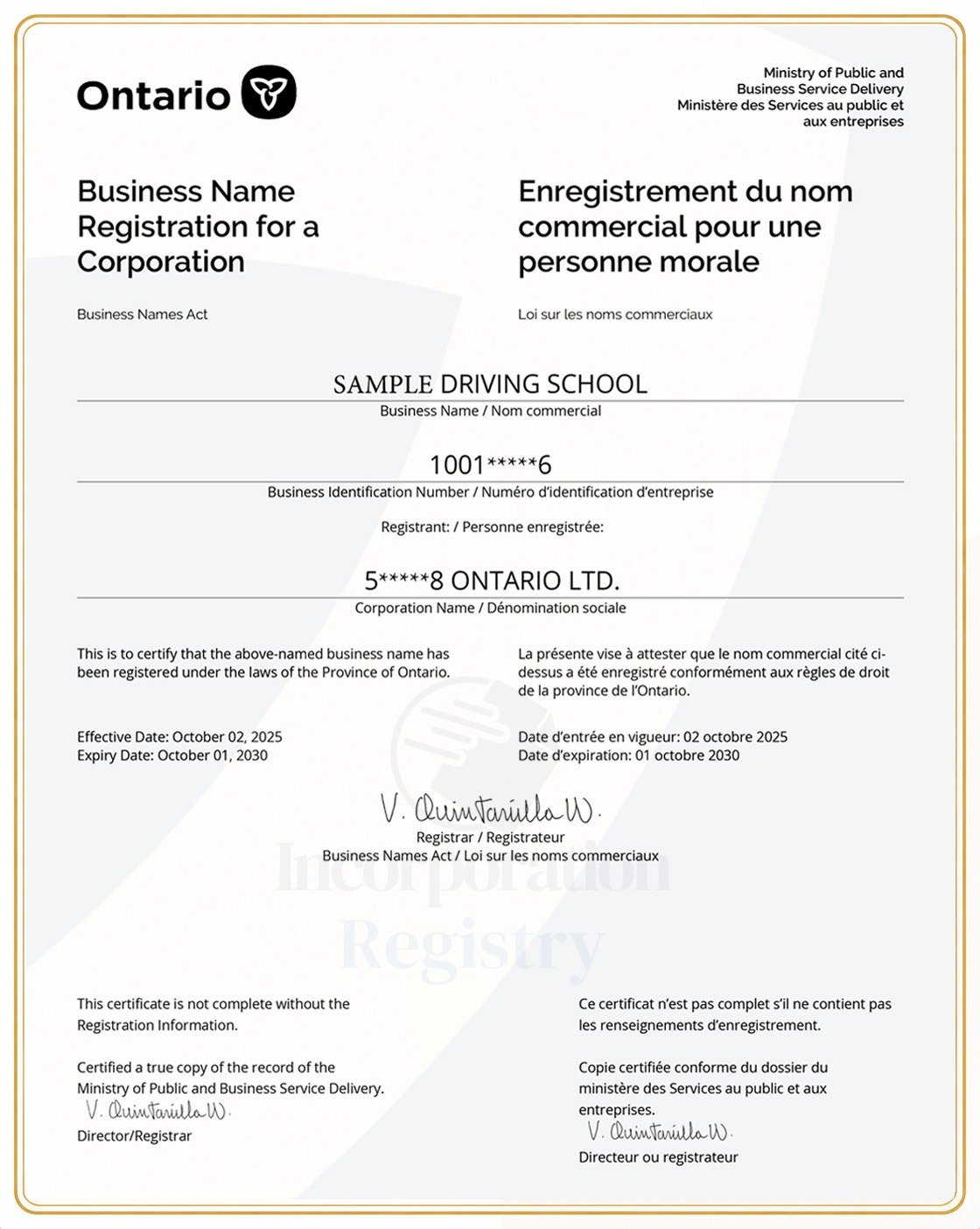
Ontario Trade Name
Alberta Trade Name
In Alberta, a trade name is filed with Corporate Registry through an authorized service provider. If you’re a sole proprietor or partnership doing business under anything other than your own legal name, registration is required before you can bank or contract under it.
BC Trade Name
British Columbia requires a Name Approval Request before you register. Once your name is approved by BC Registries, we complete your sole proprietorship or partnership registration so you can operate under your business name across the province.
Manitoba Trade Name
Manitoba business names are registered with the Companies Office, and a name reservation search is part of the process. We check your proposed name against existing Manitoba registrations, prepare the filing, and send you confirmation once it’s registered.
Saskatchewan Trade Name
Saskatchewan trade names are filed through the Corporate Registry, administered by ISC. Sole proprietors and partnerships trading under a name other than their legal name register here. We handle the name search and submit your registration for you.
Quebec Trade Name
Quebec businesses register by filing a declaration with the Registraire des entreprises, which issues your NEQ. Names used in Quebec must meet French-language requirements. We prepare your declaration and guide you through the name rules that apply.
How to Register a Trade Name in Canada
Choose Your Name
Check Availability
We search the provincial registry for conflicting or identical names. In BC and Manitoba this step includes the formal name approval or reservation the registry requires before filing.
We Prepare and File
Send us your business address, owner details and activity description. We complete the registration forms and submit them to the correct registry for your province.
Get Your Confirmation
You receive your registration confirmation and registry number. Use it to open a business bank account, sign contracts and apply for a CRA business number.
Why Registering Your Trade Name Matters
Your trade name registration is the record that connects your business name to you. Without it, banks won’t open an account in that name, contracts signed under it are harder to enforce, and in most provinces operating under an unregistered name isn’t permitted.
A registered paralegal firm that files trade names properly the first time.
Incorporation Registry is a Canadian filing service that helps business owners register and maintain their trade names. We work with sole proprietors and partnerships registering for the first time, and with accountants, lawyers and advisors filing on behalf of clients.
Our focus is the name stage — where most registrations run into trouble. We check your proposed name against the provincial registry, tell you plainly if it’s likely to be refused, and file in the right province using the right form. If the registry raises a question about your name, we deal with it rather than sending you back to the start.
01
Registered Paralegal Firm
Licensed to prepare and review business registration filings within our defined scope of practice.
02
Authorized Registry Agent
Approved to submit registrations directly to provincial business registries.
03
All Province Covered
Ontario, Alberta, British Columbia, Saskatchewan, Manitoba and Quebec — each filed under its own registry rules.
03
Confidential by Default
Client and partner information is handled under strict confidentiality and retention policies.
Client Reviews.
on Google · 28,000+ filings
“The team was with me every step, guiding me on every detail and suggesting the best route for my business. Excellent service.”
David Gillan
VERIFIED · 8 MONTHS AGO
“A fantastic experience incorporating my business. The process was smooth, fast and transparent from start to finish.”
Jordan Calderon
VERIFIED · 10 MONTHS AGO
“Great service! Very professional staff. They explained everything well and made the whole process effortless.”
Jinal
VERIFIED · 8 MONTHS AGO
Common Questions About Trade Name Registration
What is a trade name in Canada?
A trade name is the name a business operates under when it’s different from the owner’s legal name or a corporation’s registered name. For example, if Priya Sharma runs a bakery called “Maple Street Bread,” Maple Street Bread is the trade name.
Who needs to register a trade name?
Sole proprietors, partnerships and corporations that carry on business under a name other than their own legal name generally must register it with their provincial registry. This applies whether you operate from a storefront, from home, or entirely online.
Do I need to register a trade name if I use my own name?
In most provinces, a sole proprietor operating under their full legal name — such as “Daniel Roy” — does not need to register. Adding a descriptive word, like “Daniel Roy Landscaping,” usually triggers a registration requirement.
Is a trade name registration the same as incorporating?
No. Registering a trade name simply records the name you operate under, while incorporation creates a separate legal entity with limited liability and its own filing obligations.
Does registering a trade name protect it from being used by someone else?
No. Provincial registration lets you legally operate under the name, but it does not grant exclusive rights — trademark protection through the Canadian Intellectual Property Office (CIPO) is what stops others from using a similar name.
Can two businesses register the same trade name in Canada?
Yes, it happens. Registries generally do not block identical or similar names the way corporate name searches do, which is one reason a name search before filing is worth doing.
Where do I register a trade name in Canada?
Trade names are registered provincially, not federally. Filing goes through the Ontario Business Registry, Alberta Corporate Registry, BC Registries, ISC in Saskatchewan, the Manitoba Companies Office, or the Registraire des entreprises in Quebec.
What documents and information do I need to register?
You’ll typically need your proposed business name, the owner’s or partners’ full legal names, a business address in the province, and a short description of your business activity. Partnerships may also need to list each partner’s details.
Do I need to register in every province where I do business?
Yes, if you’re actively carrying on business in a province — such as having a physical location, staff, or a permanent presence there — you generally need to register in that province as well. Selling online to customers across Canada does not always create that obligation.
Can a corporation register a trade name?
Yes. A corporation that operates under any name other than its exact legal name — often called an operating name or “doing business as” name — must register that name in the province where it operates.
What happens if I don't register my trade name?
You may face fines under provincial business names legislation, and you can be blocked from enforcing contracts signed under the unregistered name. Banks will also refuse to open a business account in a name that isn’t registered.
Do I need a registered trade name to open a business bank account?
In most cases, yes. Canadian financial institutions typically ask for proof of registration, such as your master business licence or registry confirmation, before opening an account in your business name.
Does a trade name registration expire?
It depends on the province. Ontario registrations expire after five years and must be renewed, while other provinces have different rules — letting a registration lapse means you’re operating under an unregistered name.
What are the name rules in Quebec?
Quebec businesses register by filing a declaration with the Registraire des entreprises and receive a Numéro d’entreprise du Québec (NEQ). Names used in Quebec must comply with French-language requirements under provincial law.